
Caravans don't ask how far.
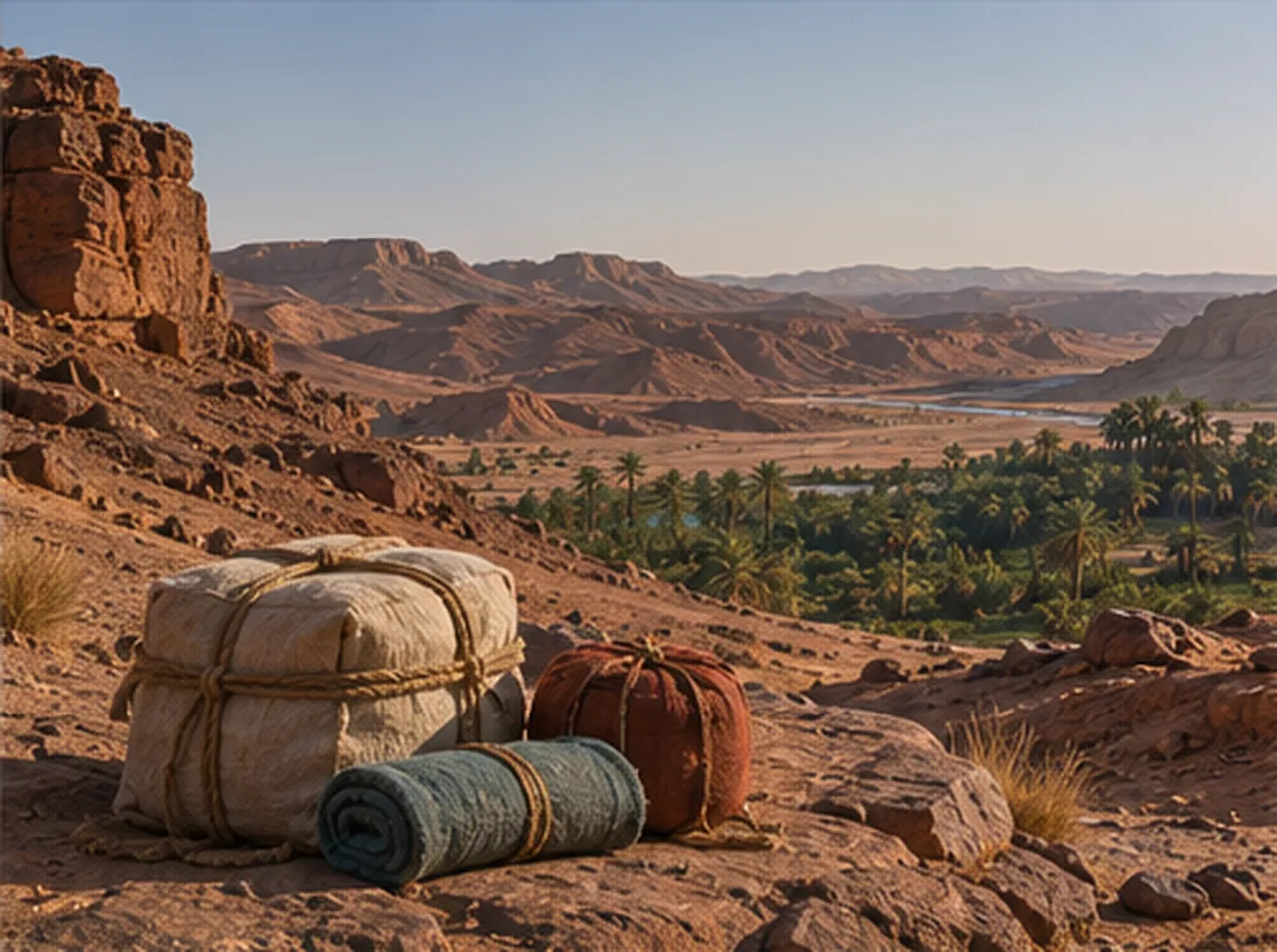
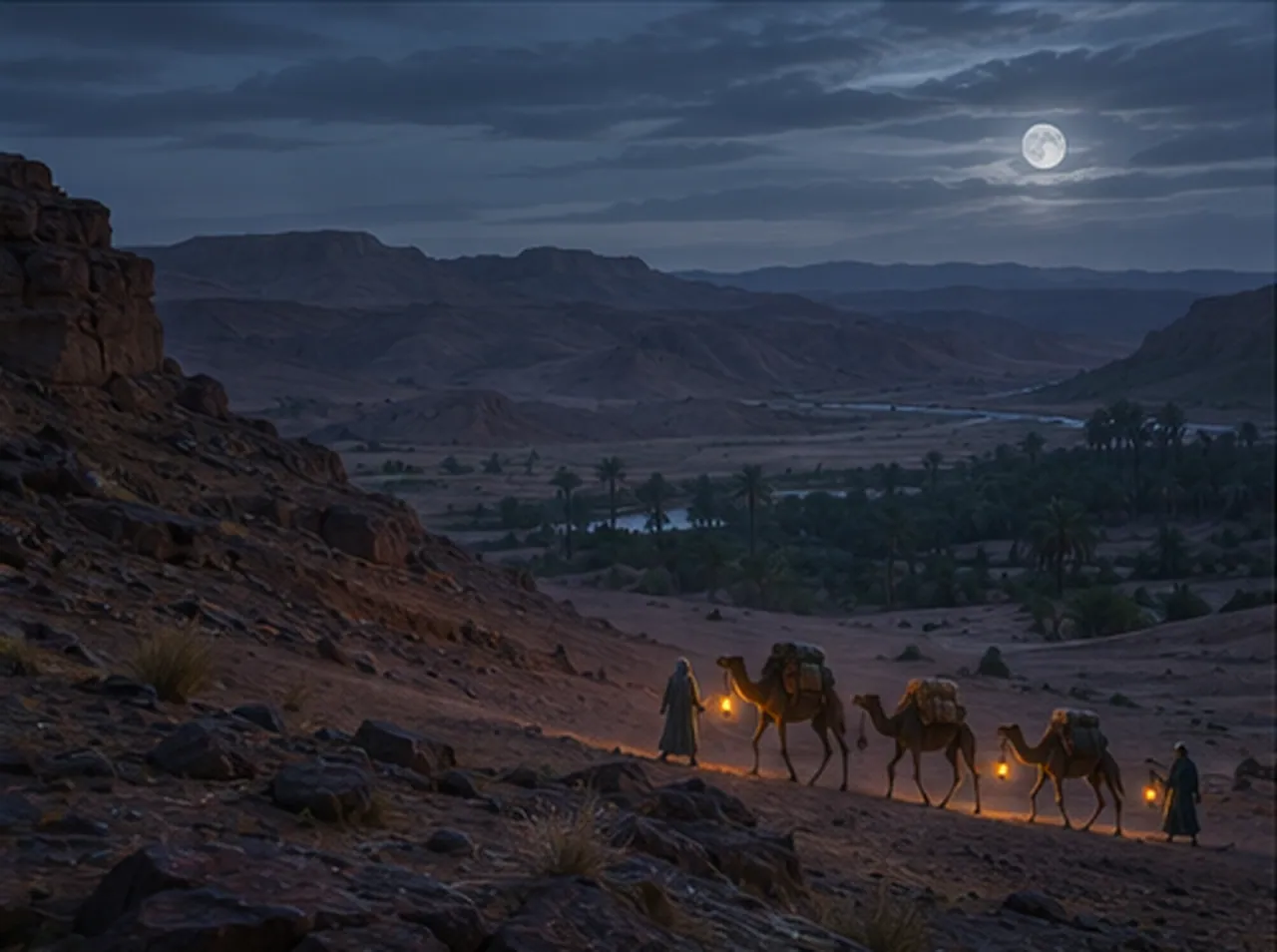
From the ridge a caravan can see the exposed part of the next crossing. The low blue band in the distance tells the travelers where the ground falls again. It gives them no measure for how much of the day they have left. A shaded stop can be seen from the high trail. The view in the opening illustration moves toward a second drawing after dusk when you use the time slider. Look for the space in front of the lead pack as the valley changes.
A crossing seen from both ends of a day
Dunerod Studios is developing original caravan games that take visual inspiration from Saharan landscapes. The routes, stops and exchange rules on these pages belong to the game’s invented world. A caravan makes its decisions while traveling with limited space and time. Water can be moved between fictional vessels at a stop. A trade that settles one immediate problem may change what can fit a few miles later. When people turn toward a night route, the available light changes what can be read from the same distance.
Plan with something you can point to
Water Before the Next Oasis concerns an offer arranged on a shaded cloth. A traveler can compare two vessels by their openings, fill marks and widths. The longer crossing may need a more accessible reserve rather than a larger vessel tied behind another load. In Cargo That Walks at Night, a marker on the back of the line can keep a turn visible when a closer pack interrupts the view. How you attach a load affects what you can reach and what people behind it can see.
Keep the notes alongside the route
The Routes and Exchanges page moves between a picture, a short field annotation and the links that explain the decision. Route Margins is an index of four studies on measuring, making an offer, using a night interval and drawing the rear packs in motion. The pictures are design material for concepts and prototypes. They are paired with notes on what needs to be read in the scene. Camp Office explains how route notes, artwork and a preliminary playable sequence are assembled. Begin with one route and come back to a number in the margin when you find a decision you want to consider again.